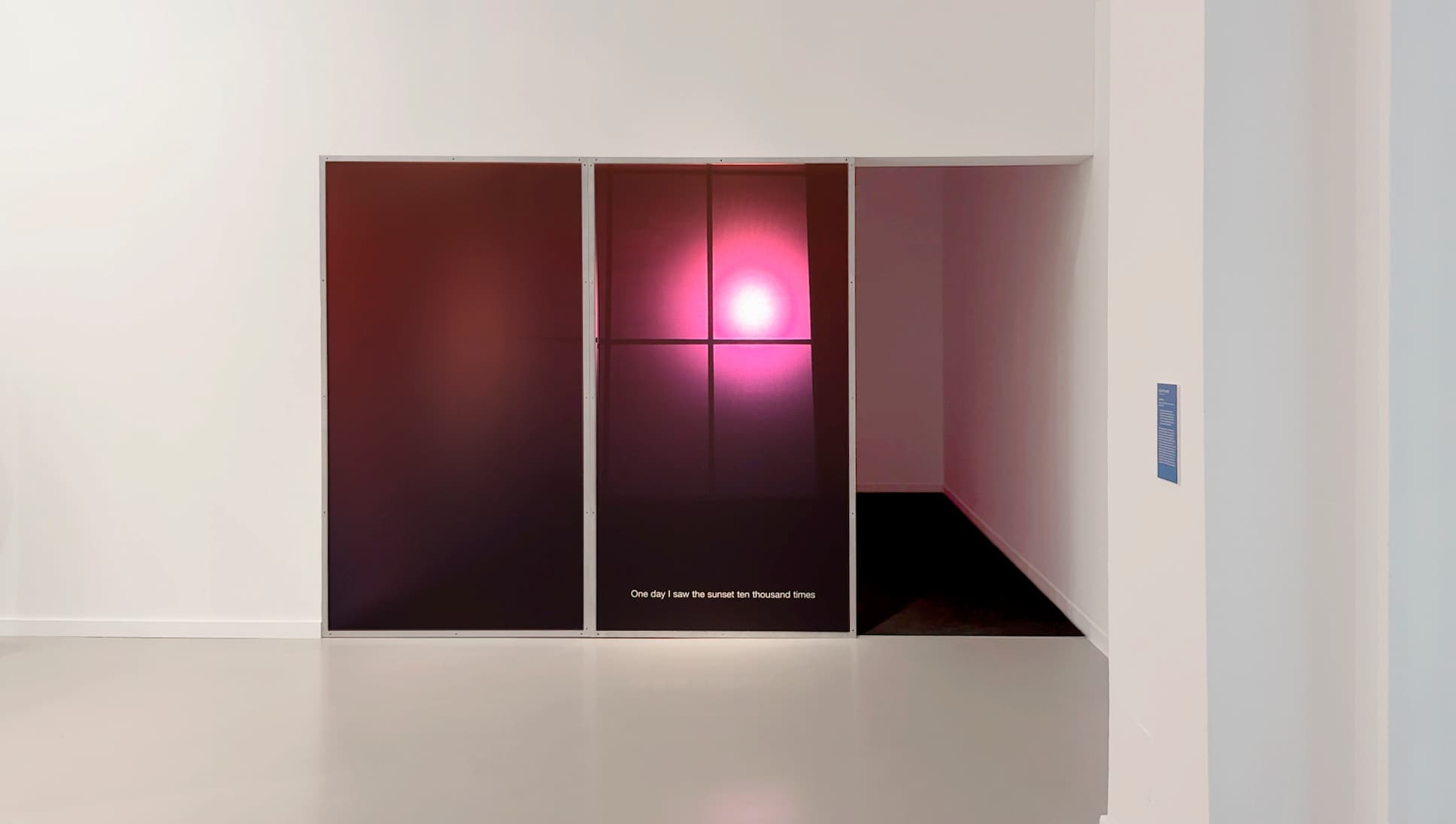
One day I saw the sunset ten thousand times reimagines artificial intelligence as an emotional machine that, one not designed to serve within a production chain, but solely devoted to observing sunsets and generating new ones.
Following a cyclical choreography that traces the path of a ray of light crossing a window over the course of a day, the machine becomes a silent observer, engaged in an act of contemplation without any utilitarian purpose. The sunset, one of the most reproduced visual motifs on the internet, has become an aesthetic cliché shaped by digital oversaturation. When we photograph it, camera sensors translate sunlight into pixels, which are then absorbed into vast datasets used to train artificial intelligence. In this process, natural light is fragmented into computational data, abstracted into patterns, and endlessly replicated. AI systems that generate these sunsets do not perceive or feel; they only recognize patterns. And yet, they produce images that are familiar to us, that we immediately recognize as sunsets. The installation returns these digital images to physical space, questioning whether an experience, once processed, filtered, and abstracted by a machine, can still evoke something meaningful. What remains in the end is a melancholic system caught in a loop: an automated gaze endlessly returning to the image of something that never truly existed.